
Answering questions on the clashes near Naku La Pass in the Sikkim sector which resulted in injuries to both sides, Chinese Foreign Ministry spokesman Zhao Lijian said that the most pressing issue for the world at present is the fight against the coronavirus.

Singh also said that India will give a befitting reply to anyone threatening its unity, sovereignty and territorial integrity as it no longer remained a "weak" country.
The talks till now have resulted in the resolution of issues in North and South Bank of Pangong Tso, Galwan and Gogra Hot Spring areas.
The Indian side has an edge over their Chinese counterparts in terms of battling the weather as a large number of them have already done duty in the Ladakh sector, including the Siachen glacier or other high altitude positions, sources said.
"Against such background, the words and deeds of relevant important military and government officials and military deployments should be conducive to deescalating and cooling down the situation, and to enhancing mutual trust, rather than the opposite", the spokesman said.

India and China are likely to hold another round of diplomatic talks this week on eastern Ladakh with a focus on moving forward in disengagement of troops in the remaining friction points, people familiar with the development said on Tuesday.
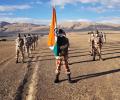
India and China on Friday agreed to hold the next round of military talks at an early date to achieve the objective of complete disengagement in remaining friction points in eastern Ladakh amid fresh sparring between the two sides on the prolonged Line of Actual Control (LAC) standoff.

Singh, in his address to the Indian-American community in San Francisco, also sent a subtle message to the United States that New Delhi does not believe in a diplomacy of 'zero-sum game' and its relationship with one country cannot be at the expense of the other.
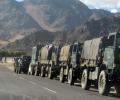
According to estimates, both India and China have deployed more than 50,000 troops in the Eastern Ladakh sector opposite each other despite the limited disengagement in the Pangong lake sector by both sides earlier this year.

He also said "Chinese belligerence is evident in its continuing propensity to project power outside its region", in turn presenting a "threat to the rules-based international order".

India and China recently held a fresh round of high-level military talks to resolve the border row that witnessed both sides agreeing to maintain "peace and tranquillity" on the ground but there was no indication of any breakthrough.

The participants would include senior ministers dealing with the situation along with the senior military leadership. The leadership is likely to discuss the Chinese military activities in Doklam and other areas on Bhutanese soil along with the Indian preparations to deal with the situation.

China has been taking "incremental and tactical actions" to press its claims at the Line of Actual Control (LAC) with India and has unsuccessfully sought to prevent New Delhi from deepening its relationship with the US during and subsequent to the standoff, the Pentagon has said in a major report on China's military modernisation.
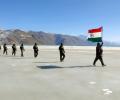
Indian troops are defending every inch of the border with China and not even a single inch of land has been taken over by the neighbouring country in recent years, Ladakh Lt Governor Brig (retd) B D Mishra said on Thursday.
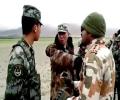
India has significantly enhanced military infrastructure, surveillance and combat capabilities along the nearly 3,500 km-long Line of Actual Control (LAC) with China since the deadly clashes in Galwan valley in 2020, sources in the defence establishment said Wednesday on the eve of the third anniversary of the hostilities.


'India's behaviour violated agreements...It's a serious military provocation'

Admiral Philips Davidson, Commander of the US Indo-Pacific Command, also told the powerful Senate Armed Services Committee on Tuesday that China's recent activities along the Line of Actual Control have opened India's eyes to what cooperative effort with others might mean for their own defensive needs as he observed that New Delhi, in the very near term, will deepen its engagement with the Quad.

We very much hope that wisdom dawns on the Chinese side, Jaishankar said in Bangkok.
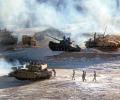
There was no visible forward movement in disengagement of troops in the remaining friction points as the Chinese side did not show flexibility in their approach on it at the 11th round of military talks.

There is a possibility of more talks at the military and diplomatic levels. India has always been in favour of peace. So, we hope a solution will be found out through talks, Singh said

'It is flabbergasting to think that this heavenly region has, for decades, been coveted by India's aggressive neighbours,' says Claude Arpi after a recent visit to Ladakh. 'Wanting to use the newly created infrastructure to defend the borders after the clash of 2020 with China and the resulting standoffs, the home ministry is keen to boost border tourism to show that these areas are controlled by India.'

'The use of military power to settle disputes is not always preferred and is the last preferred option, but it certainly remains an option.'
The intrusions into India were likely carried out by the PLA's better trained and equipped 'mobile operational units'.

Readers share their travel photos with us. You can share yours too.

External Affairs Minister S Jaishankar on Thursday asserted that India's relationship with China cannot be normal unless there is peace in the border areas and there is no ambiguity in New Delhi's signalling to that country.
National Security Advisor Ajit Doval, Chief of Defence Staff General Bipin Rawat, Chief of Army Staff General Manoj Mukund Naravane, Chief of Naval Staff Admiral Karambir Singh, Chief of Air Staff Air Chief Marshal Rakesh Kumar Singh Bhadauria, along with all the Commander-in-Chief rank officials from the three services will be attending the conference.

Launching his three-day tour of Tamil Nadu ahead of the April 6 assembly polls, the Congress leader, while interacting with advocates, reiterated his "hum do hamare do" jibe at the ruling dispensation at the Centre.

The Ministry of External Affairs said the two ministers discussed the outstanding issues related to disengagement from all friction points along the Line of Actual Control in eastern Ladakh.

'It is pure luck that we did not have any body bags, otherwise things could have been nasty.'

These beautiful photos of India will give you travel goals.

Chinese President Xi Jinping, who made a rare visit this week to the restive Xinjiang region which borders Ladakh, met the troops and officers stationed there and praised their "outstanding contributions" to the border defence and stabilisation of the volatile province.

Senior government sources told ANI that one such camp is coming up few kilometres inside the Chinese territory opposite the Naku La area in north Sikkim area, which is barely a few minutes distance from the area where Indian and Chinese troops had clashed last year when the confrontation started and also in January this year.
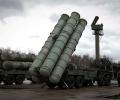
RInstead of disengagement, the Indian and Chinese armies have deployed an estimated 35,000 to 40,000 soldiers each along the LAC. The PLA has deployed S-400 air defence missiles to neutralise the IAF's advantage in air power

The nearly five-minute video captured glimpses of the lives of soldiers deployed along the ice-capped mountains of the high-altitude region including their round-the-clock vigil, training and combat readiness to deal with any threat.

India on Wednesday delivered a strong message to China that the 'unprecedented' incident in the Galwan Valley will have a 'serious impact' on the bilateral relationship and held the 'pre-meditated' action by Chinese army directly responsible for the violence that left 20 Indian Army personnel dead.
China's national legislature -- the National People's Congress (NPC) -- on October 23 adopted the new law on the protection and exploitation of the land border areas which drew sharp reaction from India as it was passed amid the protracted military standoff between the two sides in eastern Ladakh region.

The talks came a day after the two armies began a limited disengagement in a few areas in Galwan Valley and Hot Spring in a demonstration of their intent to end the row peacefully.

At a media briefing in Beijing, Chinese Foreign Ministry spokesman Wang Wenbin said the two sides have maintained smooth communication on border-related issues through diplomatic and military channels.
